
When Breathing Becomes the Hardest Part of Swimming: Breathing Pattern Disorder and EILO
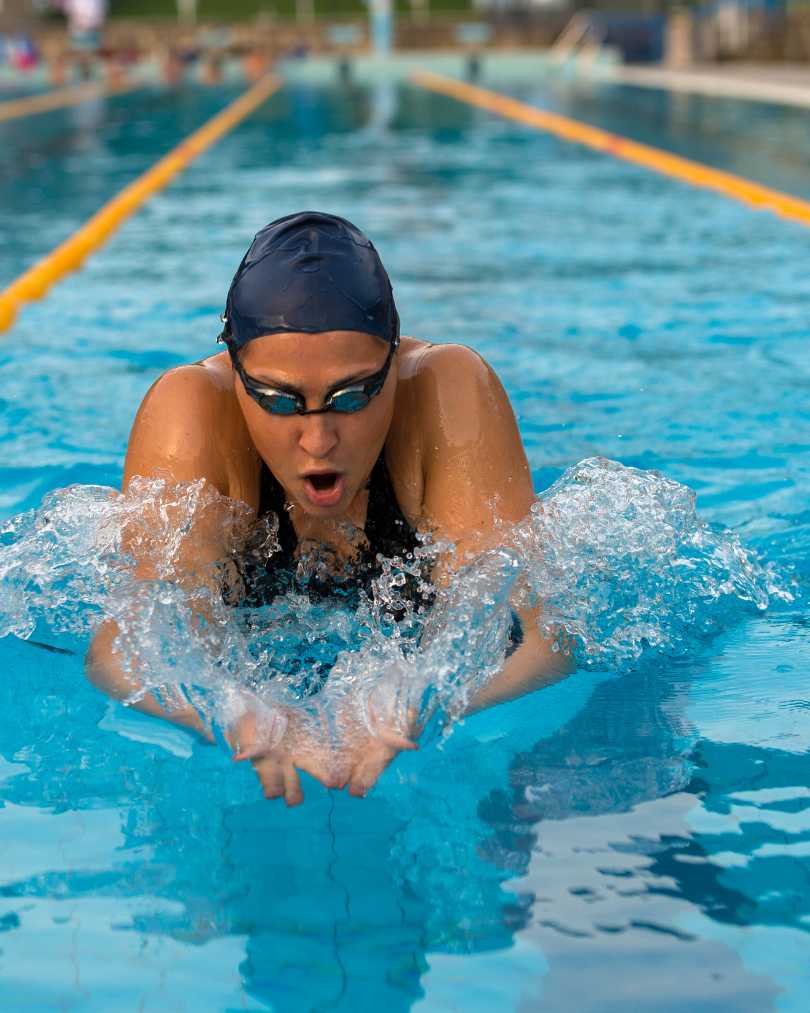
Swimming is one of the most physically demanding sports when it comes to breathing. Unlike running or cycling, where athletes can generally breathe whenever they need to, swimmers must coordinate every breath with their stroke, body position, and time spent underwater.
For most swimmers, this coordination becomes automatic with training. But for others, breathing becomes the limiting factor in their performance. They may describe feeling like they cannot get enough air, struggling to inhale, experiencing tightness in their throat, or become breathless during intense sets.
These symptoms can often be associated with poor conditioning or exercise-induced asthma; however, two other conditions may be overlooked: breathing pattern disorder and exercise-induced laryngeal obstruction.
What is Breathing Pattern Disorder?
Breathing pattern disorder (BPD), also called dysfunctional breathing, refers to breathing patterns that are inefficient, poorly coordinated, or inappropriate for the body’s demands. It involves how breathing is controlled.
A swimmer with BPD may demonstrate changes in breathing rhythm, respiratory muscle recruitment, depth of breathing, and coordinating inhalation and exhalation.
Common Signs of Breathing Pattern Disorder
Swimmers with BPD may report:
- Feeling unable to get a satisfying breath
- Air hunger, even when their oxygen saturation is normal
- Excessive upper chest breathing
- Rapid or irregular breathing
- Disproportionate breathlessness during certain sets or events
- Dizziness, tingling, or lightheadedness associated with overbreathing
Some swimmers may develop a habitual pattern of over-breathing that can lower carbon dioxide levels, contributing to symptoms such as dizziness, tingling, and increased air hunger. It is important to note that other medical conditions may also contribute, and proper evaluation is warranted.
What is Exercise-Induced Laryngeal Obstruction?
Exercise-induced laryngeal obstruction (EILO), also called vocal cord dysfunction or paradoxical vocal fold motion, occurs when the structures of the larynx narrow inappropriately during exercise.
Normally, the larynx remains open during exercise to allow for air to move freely into the lungs. In athletes with EILO, narrowing can occur at the level of the vocal folds, above the vocal folds, or both. This creates a resistance to airflow, particularly on inhalation.
What Does EILO Feel Like?
Swimmers with EILO may experience:
- Sudden breathlessness during high-intensity efforts
- Difficulty getting air in rather than out
- Tightness or a closing sensation in the throat
- Noisy breathing, particularly during inhalation
- A sensation of breathing through a straw
- Symptoms that improve relatively quickly after stopping exercise
Because EILO is frequently confused with asthma or exercise-induced bronchoconstriction, a swimmer may have been prescribed an inhaler without experiencing improvement with its use.
Can Swimmers Have Both BPD and EILO?
Yes, while breathing pattern disorder and exercise-induced laryngeal obstruction are distinct conditions, they can co-exist. This is particularly important because treating only one condition may not adequately address everything a swimmer experiences.
The relationship between the two conditions is complex, and researchers are still investigating how breathing patterns, laryngeal behavior, and physiological stress responses interact. This is why it is important to receive a comprehensive evaluation looking at both conditions.
Why Traditional Breathing Strategies Might Not Be Enough
Swimmers with EILO may be taught techniques designed to improve laryngeal control during inhalation. These strategies can be helpful, particularly when practiced under the guidance of a clinician experienced in EILO.
However, applying a strategy while sitting quietly is very different than implementing it in a pool. During swimming, athletes must simultaneously manage respiratory effort, stroke timing, body position, and the physiological demands of exercise.
A swimmer may understand a technique perfectly outside the pool but struggle to use it when symptoms develop during competition. This is why treatment should consider not only the larynx but also the athlete’s overall breathing pattern and the specific demands of their sport.
A More Comprehensive Approach to Breathing Retraining for Swimmers
At Functional Airway Lab, our approach considers multiple factors that may contribute to breathing difficulty during exercise. Depending on the swimmer’s clinical presentation, treatment may address several components.
1. Laryngeal Control and Airway Strategies
For swimmers with EILO, treatment may focus on developing more effective inhalation strategies, improving awareness of laryngeal responses, and learning techniques that can be integrated into exercise.
2. Breathing Pattern Retraining
For swimmers with BPD, treatment may address breathing rhythm, respiratory muscle coordination, unnecessary upper-body tension, and more appropriate breathing responses to changing exercise demands.
3. Respiratory Muscle Assessment and Training
Respiratory muscle strength may be evaluated when clinically indicated. Inspiratory muscle training (IMT) may be used for specific athletes to help strengthen the inspiratory muscles, primarily the diaphragm. However, IMT is not an established stand-alone treatment for EILO, and its effects on laryngeal obstruction require further research.
4. Nervous System Regulation
Breathing discomfort can activate the body’s stress response, increasing respiratory effort and the perception of breathlessness. Treatment may incorporate strategies that help swimmers recognize early symptoms and maintain control when breathing becomes challenging.
5. Sport-Specific Breathing Integration
Most importantly, breathing strategies should be transferable to the environment where symptoms occur. For swimmers, this may include coordinating breathing with stroke timing, developing consistent exhalation patterns, and gradually integrating learned strategies into increasingly demanding exercise.
Helping Swimmers Get Back to the Sport They Love
Breathing pattern disorders and EILO can be frustrating for swimmers, especially when they haven’t been understood correctly.
With an individualized approach that considers the upper airway, breathing mechanics, respiratory demands, and sport-specific challenges, swimmers can develop strategies to better manage their breathing.
At Functional Airway Lab, we specialize in evaluating and treating EILO and breathing pattern disorders in athletes, including competitive swimmers.
We offer individualized assessment and breathing retraining in Ventura, California, and through telehealth where permitted by state licensure. Please contact us to learn more about our services and schedule a consultation.
Medical disclaimer: This article is for educational purposes and does not replace medical evaluation or individualized treatment. Unexplained exercise-related breathing symptoms require appropriate medical assessment.
Leave a Reply Cancel reply
Educational Library
Services
About
Home
Pages
Contact
4532 Telephone Rd.
Suite 114
Ventura, CA 93003
(805) 754-7768
karie@functionalairwaylab.com
EILO/VCD
Licensed to Provide telepractice SPeech Pathology Services in California, Arizona, Colorado, Idaho, Nevada, and Oregon

Telepractice
BPD

