
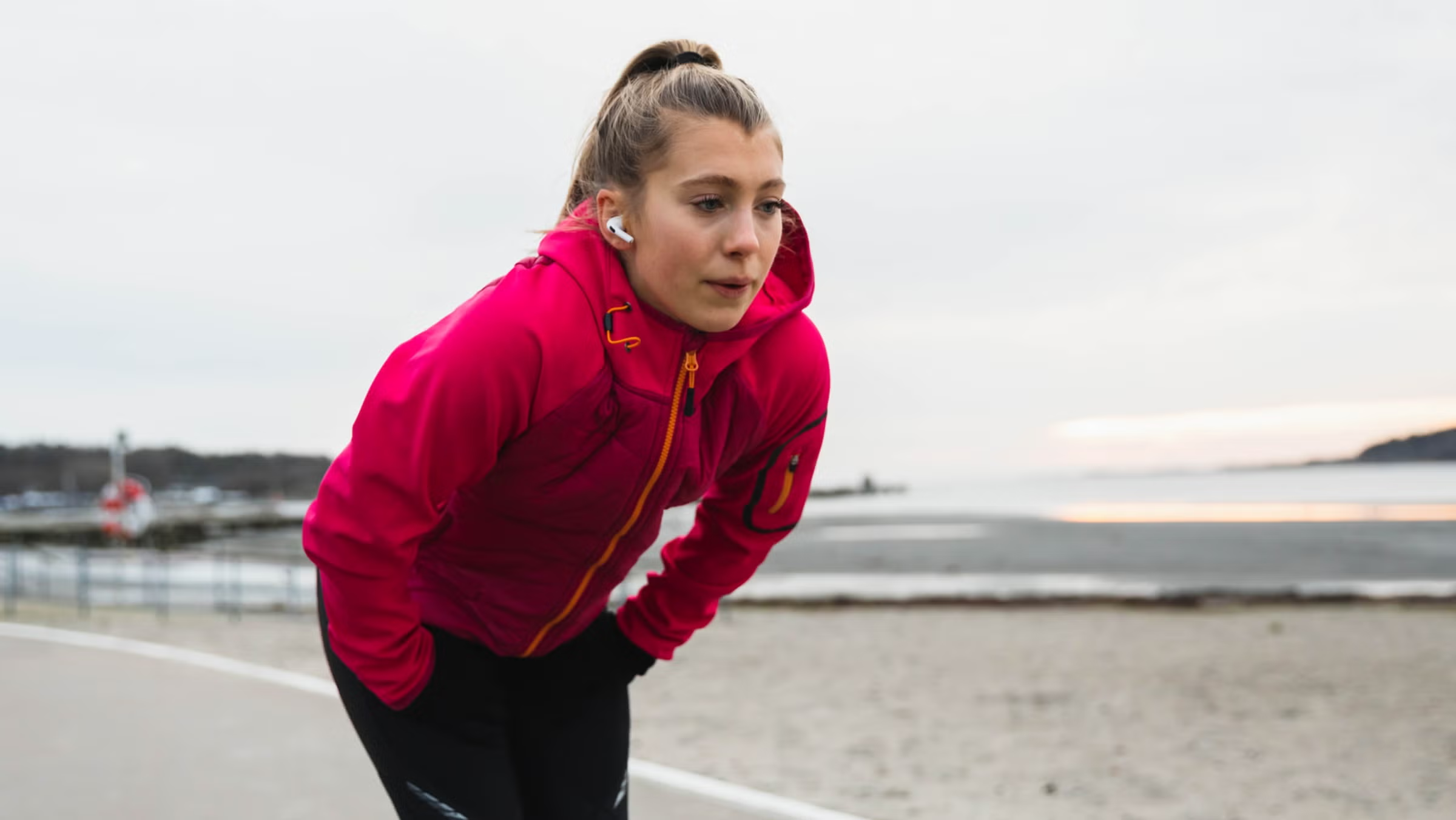
Breathing often feels like something we don’t need to think about — it just happens. But just as we each have our own unique way of walking or moving, we each have our own individual breathing pattern. Some people breathe efficiently, in a way that doesn’t get in the way of daily activity or exercise, while others develop a less efficient pattern of movement in their breathing muscles, chest wall, and abdomen — one that can actually limit their ability to be physically active.
When that inefficient pattern becomes persistent, it’s known as a Breathing Pattern Disorder (BPD) — and it’s far more common, and far more overlooked, than most people realize.
What Is Breathing Pattern Disorder?
Breathing Pattern Disorder, also referred to as Dysfunctional Breathing, isn’t yet well-defined in the research literature, but it’s generally understood to involve restricted chest wall movement due to inappropriate activation of respiratory and accessory muscles. This leads to reduced volume of air per breath and increased breathing frequency. Having BPD can result in an increased perception of breathing effort, tightness around the chest, a feeling of not being able to take a satisfying breath, and breathing that limits an individual’s capacity to perform.
What Does a “Normal” Breathing Pattern Look Like?
A more normalized breathing pattern relies on coordinated movement between the diaphragm, rib cage, and abdomen — expansion occurring in sync, with the diaphragm doing the bulk of the work. The shoulders and upper chest should remain still and relaxed with no accessory muscle use. When this coordination breaks down, the body compensates in ways that result in inefficient mechanics and induce symptoms.
Signs and Symptoms of BPD
Individuals with BPD often describe:
- A persistent sense of air hunger or not getting a “full” breath
- Tightness in the chest, shoulders, neck, or upper back
- Breathlessness that seems disproportionate to the activity being performed
- Frequent sighing or yawning
- Fatigue with exertion that doesn’t match fitness level
- Anxiety or a racing feeling tied to breathing
These symptoms can easily be mistaken for asthma, anxiety, deconditioning, or cardiac issues — which is part of why BPD is so frequently missed or misdiagnosed.
What Causes BPD?
The causes of BPD are multifaceted and vary between individuals. The causes of BPD may include physical, postural, psychological, and environmental factors. Additionally, there are many different presentations of BPD, which include:
- Excessive accessory muscle use
- Asynchrony between chest and abdomen
- Hyperventilation
- Rapid forced exhalation
- Breath holding
- Erratic breathing pattern
- Over-bracing
How Is BPD Diagnosed?
There’s currently no single gold-standard test for BPD, and many diagnoses are made by ruling out other conditions first. That said, a few tools help clinicians build a clearer picture:
- The Nijmegen Questionnaire
- The Brompton Breathing Pattern Assessment Tool
- Cardiopulmonary exercise testing can also reveal features of BPD that aren’t obvious at rest.
Because BPD so often travels alongside conditions like asthma, anxiety, and exercise-induced laryngeal obstruction, a thorough evaluation matters — both to confirm the diagnosis and to make sure other contributing conditions aren’t being missed
Treatment of BPD
Because the causes of BPD are multifaceted, treatment isn’t one-size-fits-all. Effective management starts with a careful assessment of the individual’s specific breathing pattern and the likely contributing factors. A clinician may then draw from a “toolbox” of strategies that may include:
- Breathing retraining to restore coordinated diaphragmatic, chest, and abdominal movement
- Postural and shoulder relaxation work to reduce reliance on accessory muscles
- Education on the physiology of breathing and reassurance to reduce anxiety-driven over-breathing
- Sport-specific based retraining for those with exertional symptoms
- Collaboration with speech pathology where laryngeal symptoms overlap
Contact us for a complimentary 15-minute consultation to learn more.
Functional Airway Lab
(805) 754-7768
functionalairwaylab.com
This blog is intended for informational purposes only and does not constitute medical advice. If you are experiencing breathing difficulties, please consult a qualified healthcare provider.
Leave a Reply Cancel reply
Educational Library
Contact
Services
About
Home
Pages
Contact
4532 Telephone Rd.
Suite 114
Ventura, CA 93003
(805) 754-7768
karie@functionalairwaylab.com
EILO/VCD
Licensed to Provide telepractice SPeech Pathology Services in California, Arizona, Colorado, Idaho, Nevada, and Oregon

Telepractice

